
From Static Storage to Intelligent Insight: How Deep Neural Networks Are Redefining the Future of File Archiving
In my previous blog titled ”Reimagining File Archiving: Turning Data Chaos into Business Intelligence”, I explored various nuances of the foundational pillars of any archival suite of platforms, vis-à-vis compliance, cost efficiency, security, and intelligent information lifecycle management and governance. Each of the aforementioned elements are critical for transforming any routine archiving task into a strategic advantage. However, with the evolving IT ecosystem and the introduction of next-gen technologies such as Artificial Intelligence and Machine Learning, simply archiving files won’t cut it. Organizations across the globe are now seeking something more something that can provide a different dimension to the archiving vertical something insightful.
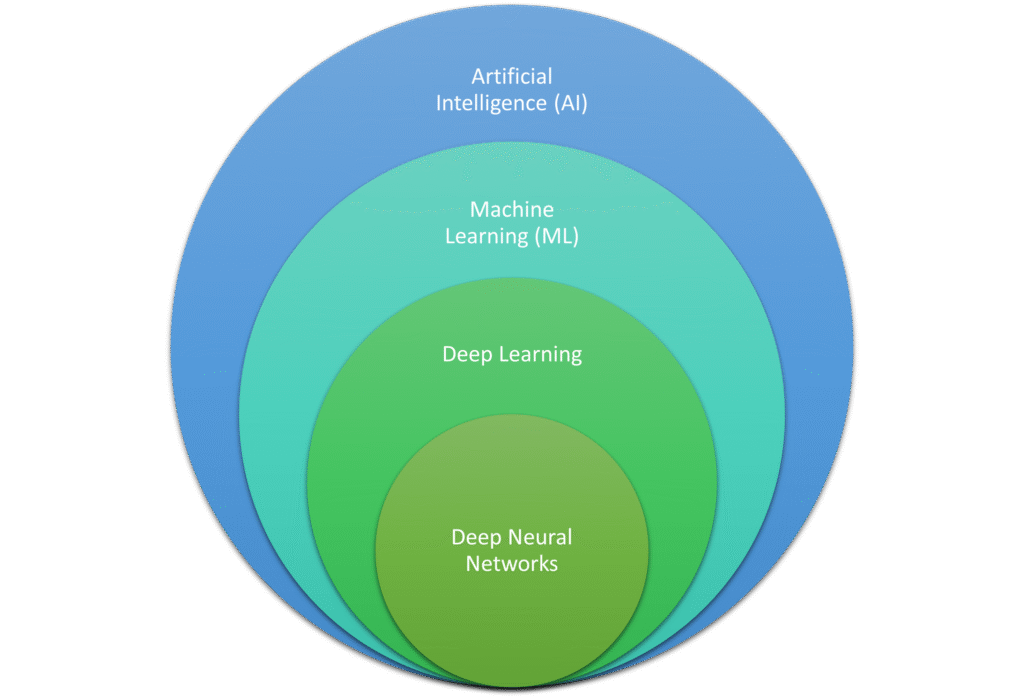
Enter Deep Neural Networks (DNNs)-the backbone of modern Artificial Intelligence (AI) which are transforming static data vaults into dynamic, intelligent ecosystems that can classify, extract meaning, and predict value from archived content.
What exactly are Deep Neural Networks (DNNs)?
Simply put, Deep Neural Networks (DNNs) are the foundational elements of modern AI and ML models. They consist of a comprehensive layer of interconnected layers of network called neurons that combine to recognize convoluted patterns, learn from historical data, and propel users into making data-driven decisions. In today’s world, DNNs are powering multiple use cases, from complex LLMs to computer vision learning and interpretation.
How can DNNs transform the File Archiving landscape?
DNNs can profoundly transform the file archiving landscape by making archival systems not just storage repositories but also intelligent knowledge engines.
1. From Manual Tagging to Automated File Classification
Traditionally, legacy file archiving depended heavily on metadata and manual tagging to determine which files to store, where to store it, and the duration of storage. This method can be error-prone, cumbersome and inconsistent. Through supervised and unsupervised learning, Deep Neural Networks can automatically classify millions of files by analyzing their content, structure, and even embedded entities (like names, account numbers, or confidential markers). This typically results in smarter and intelligent retention policies with minimal human intervention.
2. Intelligent Data Reduction and Deduplication
Predominantly, a significant cost of archiving encompasses the presence of duplicate and redundant data. Legacy file archiving systems were unaware of the content semantics. However, with DNNs semantic deduplication is enabled. DNNs consider each textual matter/content of a file as a vector, and closer the proximity of one vector to another, the higher the semantic similarity. This is how a DNN-powered modern file archiving system recognizes identical content. This reduces storage costs and eliminates noise, ensuring that only relevant versions are archived.
3. Compliance, Risk Assessment and Categorization
In regulated industries such as BFSI, Lifesciences and Healthcare, compliance with frameworks like GDPR, HIPAA etc. is paramount. DNNs can significantly improve compliance assurance by:
- Detecting personally identifiable information (PII) or protected health information (PHI) within files and documents.
- Identifying risky and non-compliant file content before archiving.
- Supporting context-based redaction or masking, where DNNs understand the sentence context before deciding what to mask.
DNNs can continuously learn and adapt to the dynamic and complex regulatory environment, which can, in turn, enhance compliance and adherence to regulatory policies.
4. Advanced Context-based Search and Retrieval
DNNs enable vector search which as mentioned before analyses the proximity of one vector to another (by embedding file content in high-dimensional vector spaces), and the vectors closest to each other are deemed to be semantically similar, which in turn is retrieved as a search result. The entire process is highly efficient and is completed within split seconds, thereby, improving both compliance investigations and knowledge reuse.
5. Predictive and Prescriptive Modelling-based File Archiving
Beyond classification and search, DNNs bring predictive and prescriptive intelligence into file archiving. Using historical patterns of data creation, access frequency, and retention cycles, DNNs can:
- Predict which files are more likely to become inactive soon and prepare them for archiving.
- Identify anomalies such as unusual access to archived files or unwanted alteration to any file, thereby indicating potential security threats.
- Recommend optimal storage tiers (hot, warm, cold, or deep archive) based on the access frequency.
This self-optimizing archive model ensures better cost-performance balance while aligning with data governance policies.

Closing Remarks
When integrated with advanced analytics engines, Deep Neural Networks (DNNs) can turn archived file data into a strategic asset. Various hidden trends, such as business patterns, can be analysed over archived data. Additionally, detection of fraudulent activities alongside customer churn ratios can be analysed, and various counteracting measures can be put in place using a DNN-based model trained on historical data. The archived file content, once mapped to various LLMs, can unlock generative insight-based functionality. These factors are imperative in transforming file archiving systems from a cost-center to an insight-generator. The foundational architectures of future file archiving systems will be based on the convergence of DNNs and LLMs, to the tune that those systems will not store, tier and retrieve files but will also have the capability to contextually converse with users about regulatory aspects, summarize archived business proposals and contracts, and create interactive dashboards based on past data records. To conclude, DNNs are transforming file archiving from a passive data repository into an intelligent, self-learning system that continuously drives compliance, efficiency, and insight.
Solix File Archiving consolidates silos of unstructured data into a unified and compliant cloud repository. It archives less frequently accessed data and decommissions legacy file servers to support fast-evolving organizational data management practices. Solix File Archiving supports all file types, including Office files, PDFs, text, images, videos, IoT, logs, and social, and enables data governance & compliance through Information Lifecycle Management (ILM), and effective legal-hold and e-discovery capabilities.