When Backup Systems Lose Track of Your Data: Why Enterprises Need a Data Control Plane
Backup and snapshot systems create copies of data they cannot govern. That leads to compliance exposure, storage bloat, and untrustworthy AI training datasets. A data control plane provides cross-platform discovery, classification, policy enforcement, and defensible deletion across every copy, wherever it lives.
Key Takeaways
- The core problem: Copy sprawl grows across snapshots, backups, replicas, and archives, but visibility and policy enforcement do not.
- The compliance reality: Regulations and standards increasingly require provable control, auditability, and secure disposal across data and media.
- The AI reality: AI initiatives fail when teams cannot prove what data is in the training set, who can access it, and whether it contains regulated content.
- The solution: A data control plane unifies discovery, classification, retention, legal hold, and deletion evidence across systems.
- The outcome: Audit readiness, lower risk, and a trusted data foundation for enterprise AI.
The Invisible Data Explosion
Modern infrastructure creates data copies by design: snapshots for rapid recovery, backups for protection, replication for resilience, and archives for cost control. The problem is that most organizations cannot answer a simple question:
How many copies of this data exist, and which ones can I safely delete?
When the answer is unknown, data turns into operational drag and compliance risk. It also becomes an AI liability because training pipelines inherit whatever exists, including duplicates, stale records, and regulated content.
Define the Terms
GDPR is the EU General Data Protection Regulation. HIPAA is the U.S. Health Insurance Portability and Accountability Act. PII is Personally Identifiable Information. PHI is Protected Health Information.
DSPM stands for Data Security Posture Management, a category focused on discovering and classifying sensitive data and assessing exposure. Gartner describes DSPM as discovering unknown data across on-prem and cloud environments and helping categorize and classify it, then assessing access and exposure risk. Source.
Why Backup and Snapshot Tools Cannot Solve This Alone
Backup tools are designed to protect and restore data. They are not designed to understand data content, ownership, retention obligations, or legal constraints. In practice, they track when and where a copy was created, but not what is inside or why it must be kept.
Backup Systems vs Data Control Planes
| Capability | Backup / Snapshot Systems | Data Control Plane |
|---|---|---|
| Protection and restore | Strong, platform-specific | Works alongside existing backup tools |
| Cross-platform inventory | Limited to that tool’s view | Unified catalog across storage, backup, archive, and cloud |
| Content classification | Typically minimal or none | Identifies PII, PHI, regulated records, and sensitive content |
| Retention and legal hold | Often time-based and siloed | Policy-driven holds and retention enforcement across systems |
| Defensible deletion | Hard to prove completeness | Audit evidence that deletion was complete and policy-aligned |
| AI readiness | Data may be unclassified or stale | Governed datasets with lineage, access controls, and proof |
Why This Breaks Compliance, Security, and AI
Regulators and auditors increasingly expect provable control over where data resides and what happens to it over time. GDPR Article 17 establishes the right to erasure. GDPR Article 17.
In healthcare, HIPAA includes required safeguards and disposal expectations, including policies and procedures for final disposition of electronic PHI (ePHI). 45 CFR 164.310. HHS also emphasizes disposal safeguards and removal of ePHI before reuse or disposal. HHS FAQ.
In financial services, SEC Rule 17a-4 recordkeeping requirements include expectations around preserving records and, in updated guidance, an audit-trail alternative to non-rewriteable storage, emphasizing auditability and reproducibility. SEC guidance.
And for secure data disposal, NIST provides practical guidance for media sanitization decisions, including processes and documentation expectations. NIST SP 800-88 Rev. 1.
A concrete mini-scenario
A customer submits a GDPR deletion request for personal data (PII). The production record is deleted quickly, but copies of the same data exist in: a weekly snapshot chain, a monthly backup repository, and an archive copy created for cost optimization.
Without a cross-platform catalog and classification, the organization cannot prove all copies were identified, held appropriately, or deleted when permitted. That is how deletion requests turn into audit exposure.
The Missing Layer: A Data Control Plane
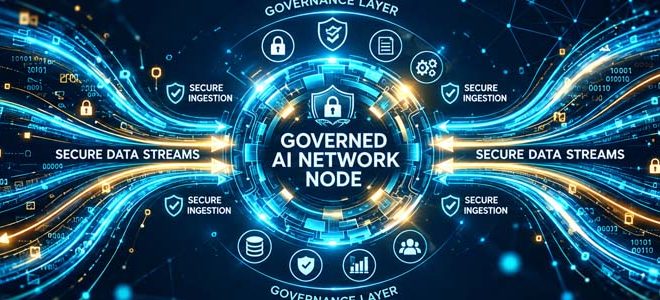
The practical fix is not to replace backup. It is to add the missing governance layer that spans all systems and all copies. This is aligned with the broader industry direction toward discovery and classification layers such as DSPM, which emphasize identifying sensitive data across environments and assessing exposure risk. IBM overview.
How a data control plane works
- Discovery: Connects to storage, backup, archives, and cloud to build a complete inventory of copies.
- Classification: Identifies sensitive content such as PII and PHI and maps applicable obligations.
- Policy enforcement: Applies retention, legal hold, and access controls consistently across systems.
- Audit and deletion evidence: Produces proof of policy actions and deletion completeness for auditors and regulators.
Where Solix Fits
Enterprises that solve copy sprawl share a common approach: they decouple governance from storage mechanics. Implementing a data control plane requires a platform that can span complex hybrid environments across storage, backup, archives, and cloud.
The Solix Unified Data Platform provides this layer by delivering discovery, classification, policy enforcement, and auditability across enterprise data estates, including regulated industries where proof matters.
For organizations building AI programs, Solix also supports an AI-ready, governed foundation that aligns with modern enterprise AI initiatives. Learn more about Solix Enterprise AI.
Frequently Asked Questions
Is my backup data subject to GDPR or privacy deletion requests?
Often, yes. GDPR Article 17 establishes the right to erasure. The operational challenge is proving you identified and handled all relevant copies across systems. GDPR Article 17.
What is the difference between data backup and data governance?
Backup is about restore. Governance is about knowing what data exists, classifying it, controlling access, enforcing retention and holds, and producing audit trails that stand up to scrutiny.
How does a data control plane work with my existing backup software?
It complements it. Backup tools keep doing protection and recovery. The control plane adds discovery, classification, policy enforcement, and defensible reporting across systems.
What is defensible deletion?
Defensible deletion means you can prove what was deleted, why, when, and that deletion was complete across relevant copies, with audit evidence. Secure disposal guidance is commonly aligned to principles in NIST SP 800-88. NIST SP 800-88.
Can AI models be trained on backup data?
They can, but it is risky without governance. Backup repositories can contain regulated data and unknown duplicates. A governance layer helps validate classification, access controls, and lineage before use.
Take Control of Your Data Copies
If backup and snapshots are creating uncontrolled copies, the answer is not more storage. The answer is governance that spans every system and produces audit-ready proof.
Schedule a Demo | Explore Solix Enterprise AI
Transparency note: This article describes a common enterprise challenge and a platform-based approach to solving it. Specific compliance requirements vary by jurisdiction and industry and should be validated with qualified legal and regulatory experts.