
Reimagining File Archiving: Turning Data Chaos into Business Intelligence
Listen to the blog
File archiving has transcended its legacy definition of just being a long-term storage mechanism to become more of a strategic data management powerhouse. The strongest archival platforms are built around four foundational pillars: compliance, cost efficiency, security, and intelligent information lifecycle management and governance. Each element addresses a pressing challenge for any modern enterprise. On one hand, compliance ensures that enterprises are audit-ready and adhere to industry regulations and guidelines. On the other hand, cost efficiency reduces the overall burden of storing large volumes of data, security ensures that these sensitive files are devoid of unwanted alteration, and lifecycle management brings intelligence into how information is stored, accessed, and eventually retired. Put together, these pillars transform archiving from a routine IT task into a strategic advantage.
With a steady rise in unstructured data, from office documents and design files to user-generated content and compliance records, file archiving has become a fundamental factor in data governance and digital transformation.
Industry Drivers and Challenges
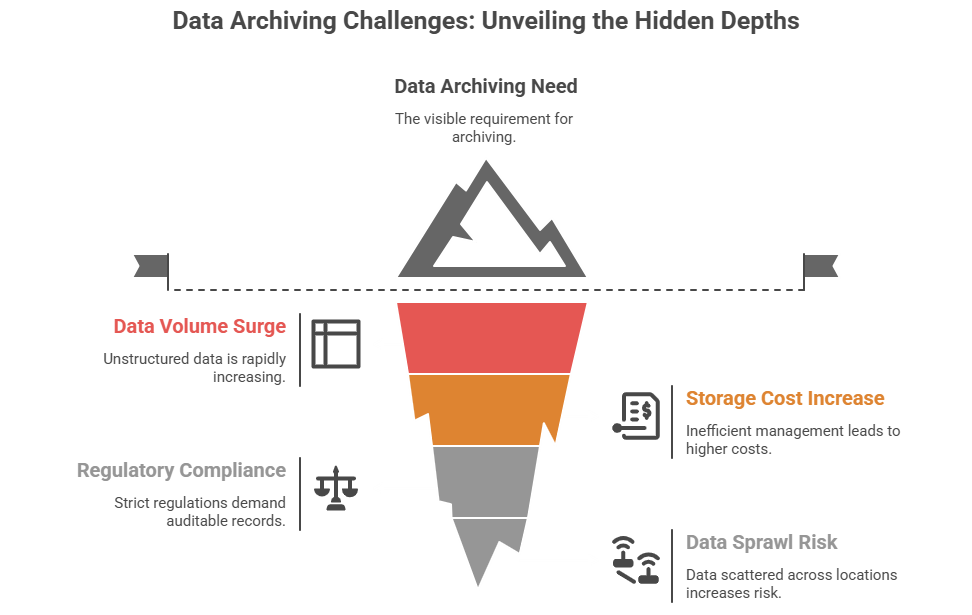
The need for an advanced file archiving solution is of utmost importance regarding the business-critical mandates it holds. Enterprises are facing severe complexities.
- Unprecedented surge in data volumes, especially unstructured data, which includes documents, media files, etc.
- Increase in storage costs due to inefficient management of redundant, duplicate, or rarely accessed files
- Stringent regulatory mechanisms that demand auditable records and retention without any alteration
- Risk of data sprawl due to the availability of data over multiple avenues across on-prem servers and cloud, resulting in security breaches, cyber attacks, and other IT vulnerabilities.
Key Features of Modern File Archiving Solution
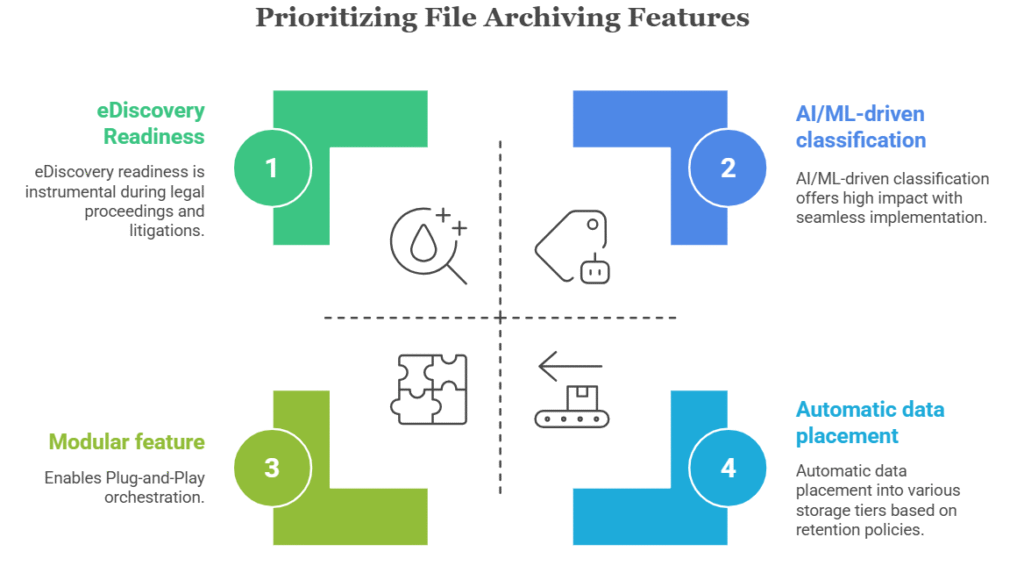
- Modular feature with a plug-and-play orchestration
- Automatic data placement into hot, warm, or cold storage tiers for performance optimization.
- Reduces significant storage by eliminating redundancies.
- Enables elastic search and seamless categorization of files.
- AI/ML-driven classification and retention
- eDiscovery readiness during legal proceedings
- Flexibility during deployment with respect to on-prem, hybrid, and cloud deployment options
- Archived data should not be modified, altered, or changed by unauthorized users.
Business Benefits
Deploying a file archiving solution has significant strategic advantages and cost benefits. These are;
- Lower Costs: By moving rarely used files into cheaper storage options and cleaning up duplicate records, companies can noticeably cut down their storage and infrastructure spending.
- Easier Compliance: With governance processes in place, organizations maintain clear records and stay aligned with regulatory requirements — without rushing to prepare at the last minute.
- Better Productivity: When information is organized correctly, employees can find what they need faster, which speeds up daily work and helps decision-makers act with confidence.
- Stronger Protection: Good data management reduces the chances of breaches, accidental deletions, or uncontrolled data sprawl from unapproved tools.
- Greener IT Practices: Using resources more efficiently means less power consumption and server strain, supporting both cost savings and sustainability goals.
What does the future hold for File Archiving?
Artificial Intelligence has been pivotal in shaping the file archiving ecosystem as a whole, with the three pillars of smart automation, dynamic data handling, and strategic integration at the center.
- Intelligent Automation: AI is predominantly leveraged to automatically capture, organize, and analyze documents, eliminating siloed and disparate processes. This makes information easy to find and act on.
- Compliance and Security: Modern AI systems ensure organizations are privy to the dynamic and complex regulatory landscape. These AI-based systems automatically generate audit trails, create retention policies, and precisely detect sensitive data, thereby facilitating significant mitigation of risks.
- Scalable and Flexible Platforms: File Archiving will have the option for elastic scalability and total local control by working across cloud and on-premise setups.
- Integration of Data Lakes: File Archives will feed directly into Enterprise Analytics and Artificial Intelligence/Machine Learning pipelines.
Closing Remarks
Balancing data retention, compliance, and accessibility has become crucial for organizations today. By retiring redundant data and data with limited priority to lower-tier storage, costs can be significantly reduced, operational efficiency enhanced, and risks minimized. As data volumes grow exponentially, innovative file archiving solutions, which facilitate unlocking critical business insights, meet regulatory demands, and help sustain long-term information integrity, will become ever more vital. Embracing a robust file archiving solution today will pave the way for an agile, secure, and data-driven future.
SOLIXCloud File Archiving consolidates silos of unstructured data into a unified and compliant cloud repository. It archives less frequently accessed data and decommissions legacy file servers to support fast-evolving organizational data management practices. SOLIXCloud File Archiving supports all file types, including office files, PDFs, text, images, videos, IoT, logs, and social, and enables data governance & compliance through Information Lifecycle Management (ILM), and effective legal-hold and e-discovery capabilities.