
Enterprise Content Services

Records Management for Businesses: Understanding Best Practices
Businesses that apply proven best practices to their records management policies enjoy financial and strategic advantages over their competition. Complete and well-organized records help companies optimize processes and information availability, strengthen customer relationships, and safeguard financial health. Records management has also emerged as a mission-critical concept as regulatory, and compliance regimes become increasingly complex. (more)

Understanding the Ins and Outs of Intelligent Document Data Extraction
As we move to a digital future, businesses frequently process written, scanned, or digitally created documents such as invoices, checks, order forms, and bank statements. Traditionally a manual process, data extraction (capturing specific pieces of information from documents) will never become irrelevant. The data extraction market is expected to grow to $4.9 billion in 2027. And Gartner predicts 70% of organizations in 2025 will focus on innovative techniques to extract value from unstructured sources. However, the method by which businesses extract data has evolved—and there’s a new change that can simplify life for your company. (more)

File Archiving Unpacked: Simply Automate and Maximize the Benefits
Unstructured data (Documents, PDFs, PPTs, text files, social media data, etc.) is growing at an unprecedented rate. As per a report published by IDC in 2021, enterprises have an average of 71PB of file storage in on-premises locations and over 91PB of it in public cloud locations. It, therefore, stands to reason that file archiving strategy is of the utmost importance for any organization to consider today. (more)
Backup vs. Archiving: Understand the difference
Many IT professionals consider Backup and Archive the same and frequently use one instead of the other. But in reality, they are entirely different and have diverse and essential purposes. Hence, it is crucial to understand what they are and their differences. (more)
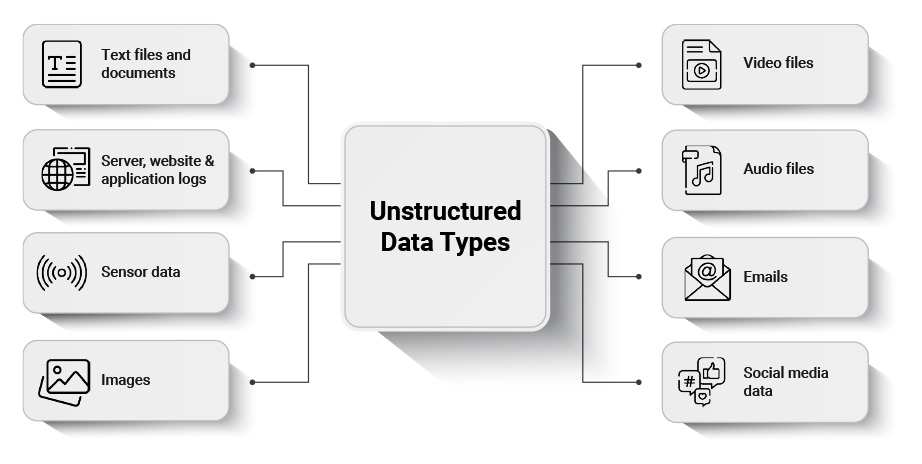
What is File Archiving?
File archiving is the practice of identifying and storing static/inactive files in low-cost, long-term secondary storage for future business, legal, or compliance purposes. Sometimes also referred to as Unstructured Data Archiving, File archiving has become crucial for organizations since, according to Gartner, unstructured data represents an astounding 80 to 90% of all new enterprise data, and it’s growing 3X. (more)

New Cloud Services are Foundational to Gaining Control Over Content
My next-door neighbor has a two-car garage and a large shed in the backyard. In the twenty-plus years we have lived next door, they have yet to park a single car in their garage. The garage is overflowing with all manner of yard equipment, winter tires, retired exercise equipment, and the odd piece of furniture. The shed is also packed. They own a snowblower, I often lend them ours because they can’t access their own. Unfortunately, many organizations handle file management in a similar fashion. (more)