Gartner® just released a prediction (https://www.gartner.com/en/newsroom/press-releases/2026-01-29-gartner-predicts-35-percent-of-countries-will-be-locked-into-region-specific-ai-platforms-by-2027).
“By 2027, 35% of countries will be locked into region-specific AI platforms using proprietary contextual data. Gartner also predicts that platform lock-in will rise from 5% to 35% by 2027.”
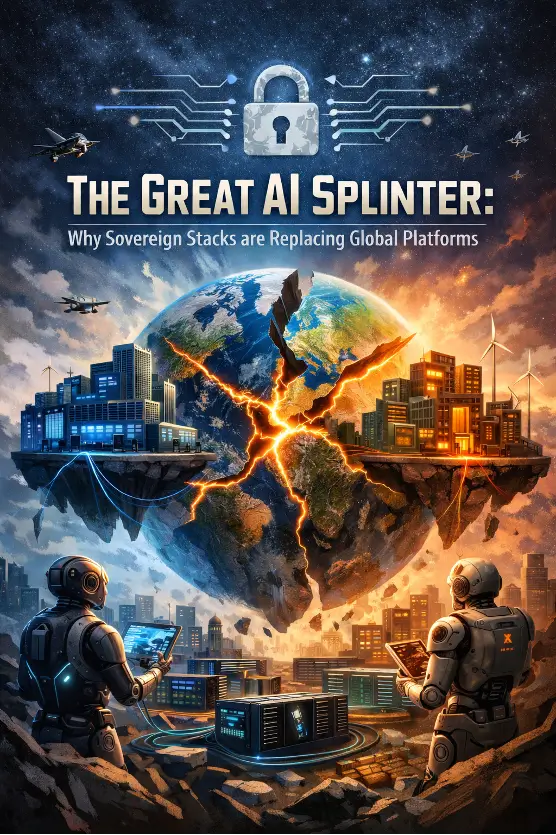
This is not about technology preference. This is about sovereignty, control, and the end of the global AI model.
The Shift to Regional AI Stacks
Countries with digital sovereignty goals are pouring investment into domestic AI infrastructure. They want alternatives to what Gartner calls the closed U.S. model. This includes computing power, data centers, infrastructure, and models aligned with local laws and culture.
Gaurav Gupta, VP Analyst at Gartner (https://www.linkedin.com/in/gaurav-gupta-85b6366/), makes the point clear.
“Trust and cultural fit are emerging as key criteria. Decision makers are prioritizing AI platforms that align with local values, regulatory frameworks, and user expectations over those with the largest training datasets.”
Here’s the data. Localized models deliver more contextual value. Regional LLMs outperform global models in education, legal compliance, and public services, especially in non-English languages.
Why This Matters to Your Organization
The fragmentation comes with costs. Reduced collaboration between nations. Duplication of effort. Countries building parallel systems and supply chains because non-Western customers worry about overly Western influence in existing AI technology.
“Gartner predicts nations establishing sovereign AI stacks will need to spend at least 1% of their GDP on AI infrastructure by 2029.” That’s a national commitment on par with defense spending in some regions.
AI sovereignty means a nation or organization independently controls how AI is developed, deployed, and used within its geographical boundaries. Regulatory pressure, geopolitics, cloud localization, national AI missions, corporate risks, and national security concerns all drive this acceleration.
The fear of falling behind in the technological race pushes nations and companies to innovate rapidly. They’re investing heavily to achieve self-sufficiency across the entire AI stack.
The Infrastructure Foundation
Data centers and AI factory infrastructure form the backbone of this sovereign AI movement. These facilities enable nations to train and run models on domestic hardware with sensitive data staying local.
Gupta notes that this concentration of infrastructure will create explosive build-up and investment. A few companies controlling the AI stack will achieve double-digit, trillion-dollar valuations.
The resulting market structure favors region-specific platforms. These blend models, data, and infrastructure tuned to local requirements. The downside: organizations become tied to a particular ecosystem. Switching costs rise. Procurement flexibility drops.
What You Need to Do
If you operate across multiple jurisdictions, Gartner offers guidance.
Build model-agnostic workflows. Create orchestration layers allowing you to switch between large language models across regions and vendors. You need this flexibility.
Ensure your AI governance, data residency, and model tuning practices meet country-specific legal, cultural, and linguistic requirements. Each market has different rules.
Develop relationships with national cloud providers, regional model vendors, and sovereign AI stack suppliers in priority markets. Build a vetted partner list.
Monitor AI legislation closely. Track data sovereignty rules and emerging standards. These will determine where models run and how you process user data. Requirements will fragment deployments across markets and shape vendor selection.
The End of Universal Solutions
The era of one global AI platform serving all markets is ending. The shift to regional platforms creates complex challenges for multinational companies.
You will manage multiple platform partnerships. Each will have unique compliance and data governance demands. Buyers will choose regional platforms offering strong performance and local compliance. Vendors will forge alliances with sovereign cloud providers and open-source models to stay competitive.
Global model vendors must prove contextual value or lose market share in regulated and culturally sensitive sectors.
Once locked into a regional platform, getting out won’t be easy. The question is not whether this fragmentation will happen. The question is how quickly you adapt your strategy to navigate it.
Your competitors already started.
GARTNER is a trademark of Gartner, Inc. and its affiliates.

Stephen Tallant
Vice President of Product Marketing
DISCLAIMER: THE CONTENT, VIEWS, AND OPINIONS EXPRESSED IN THIS BLOG ARE SOLELY THOSE OF THE AUTHOR(S) AND DO NOT REFLECT THE OFFICIAL POLICY OR POSITION OF SOLIX TECHNOLOGIES, INC., ITS AFFILIATES, OR PARTNERS. THIS BLOG IS OPERATED INDEPENDENTLY AND IS NOT REVIEWED OR ENDORSED BY SOLIX TECHNOLOGIES, INC. IN AN OFFICIAL CAPACITY. ALL THIRD-PARTY TRADEMARKS, LOGOS, AND COPYRIGHTED MATERIALS REFERENCED HEREIN ARE THE PROPERTY OF THEIR RESPECTIVE OWNERS. ANY USE IS STRICTLY FOR IDENTIFICATION, COMMENTARY, OR EDUCATIONAL PURPOSES UNDER THE DOCTRINE OF FAIR USE (U.S. COPYRIGHT ACT § 107 AND INTERNATIONAL EQUIVALENTS). NO SPONSORSHIP, ENDORSEMENT, OR AFFILIATION WITH SOLIX TECHNOLOGIES, INC. IS IMPLIED. CONTENT IS PROVIDED "AS-IS" WITHOUT WARRANTIES OF ACCURACY, COMPLETENESS, OR FITNESS FOR ANY PURPOSE. SOLIX TECHNOLOGIES, INC. DISCLAIMS ALL LIABILITY FOR ACTIONS TAKEN BASED ON THIS MATERIAL. READERS ASSUME FULL RESPONSIBILITY FOR THEIR USE OF THIS INFORMATION. SOLIX RESPECTS INTELLECTUAL PROPERTY RIGHTS. TO SUBMIT A DMCA TAKEDOWN REQUEST, EMAIL INFO@SOLIX.COM WITH: (1) IDENTIFICATION OF THE WORK, (2) THE INFRINGING MATERIAL’S URL, (3) YOUR CONTACT DETAILS, AND (4) A STATEMENT OF GOOD FAITH. VALID CLAIMS WILL RECEIVE PROMPT ATTENTION. BY ACCESSING THIS BLOG, YOU AGREE TO THIS DISCLAIMER AND OUR TERMS OF USE. THIS AGREEMENT IS GOVERNED BY THE LAWS OF CALIFORNIA.
-
 White Paper
Enterprise Information Architecture for Gen AI and Machine Learning
Download White Paper -

-
-