What is a Data Warehouse?
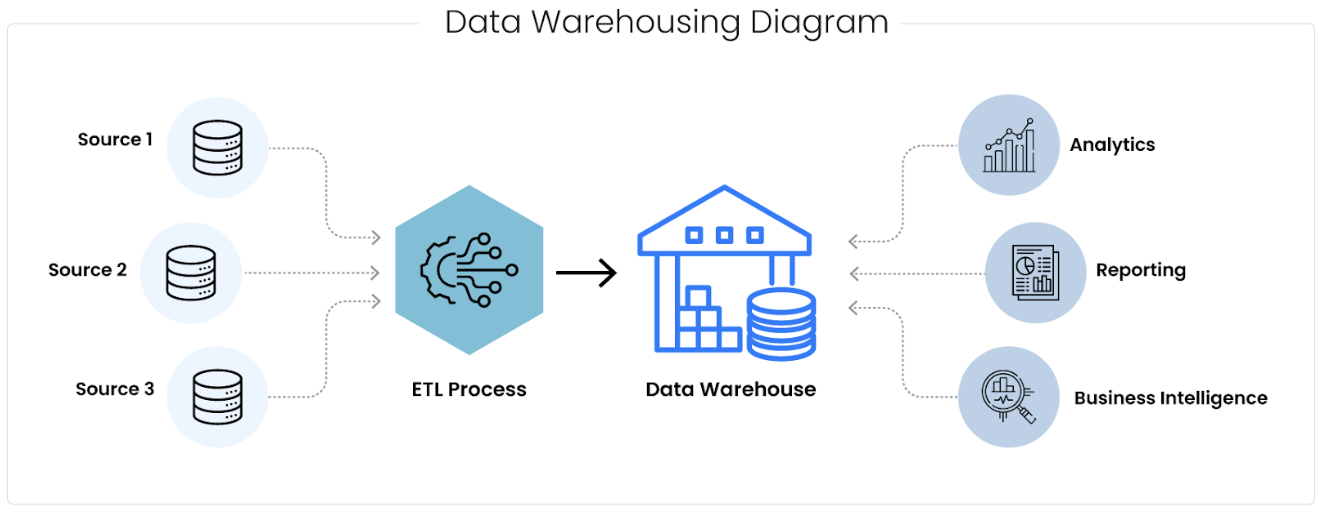
A Data Warehouse is a centralized repository that stores large volumes of structured data in pre-defined schema from various sources within an organization. It is designed to support business intelligence (BI) and reporting activities by providing a consolidated and optimized view of data for analysis and decision-making. Data warehouses are crucial in organizing and managing data to facilitate efficient querying, reporting, and analysis processes.
Key Benefits of Data Warehouses
- Centralized Data Repository: Data Warehouses offer a centralized storage solution for data from diverse sources, enabling easy access to integrated information across the organization.
- Improved Data Quality and Consistency: Enforcing data integration and standardization processes enhances data quality and consistency, instilling trust in the accuracy of analytical information.
- Enhanced Performance for Analytics: Optimized for analytical queries, Data Warehouses deliver improved query performance, allowing swift retrieval of insights from large datasets for efficient decision-making. Also, this approach avoided unnecessary strain on live transactional systems.
- Historical Data Analysis: The capability to store and analyze historical data enables organizations to identify trends, patterns, and changes over time, supporting strategic planning.
- Reliable Reporting and Self-Service Analytics: Data Warehouses empower users with self-service reporting, reducing dependence on IT for ad-hoc reports and fostering agility in decision-making.
- Facilitation of BI and Analytics Tools: Seamless integration with various business intelligence and analytics tools enhances their functionality, enabling organizations to leverage advanced analytics for deeper insights.
- Scalability and Flexibility: Designed to scale with growing data needs, Data Warehouses ensure sustained performance and efficiency as data volumes increase.
Challenges in Data Warehousing
Data Warehousing, though powerful, posed key challenges:
- Complexity in management
- High cost of storage and scalability
- Lack of real-time processing support,
- Rigid data modeling, limiting adaptability.
What you can do with Solix

Enter to win a $100 Amex Gift Card